COMMERCIAL AND MIXED-USE REAL ESTATE
Retail, Net Lease, Office, and Mixed-Use Buildings.
Commercial and Mixed-Use Properties.
Commercial and mixed-use real estate is a core holding in many private and institutional portfolios. It spans retail, office, net lease, and mixed-use buildings, from a single storefront to a community shopping center.
In this sector, value is earned block by block and lease by lease. Location, tenant credit, remaining term, and submarket demand determine how each property is priced and who will pursue it. In mixed-use buildings, how each use supports the others matters as much.
The sector includes five property types: Street and Neighborhood Retail, Single-Tenant Net Lease, Shopping Centers, Office Buildings, and Mixed-Use Buildings.
Street and Neighborhood Retail
Street and neighborhood retail properties are storefronts and small buildings facing a public street, typically leased to local merchants, restaurants, and service providers. Many sit within walkable districts, with apartments or offices above and shared or on-street parking. Ownership is often generational, and many change hands only once. Pricing reflects visibility, foot traffic, tenant mix, and rents relative to nearby space.
[02]
Single-Tenant Net Lease
Single-tenant net lease properties are occupied by one tenant who pays taxes, insurance, and maintenance in addition to rent. Common examples include pharmacies, quick-service restaurants, banks, auto parts stores, and medical clinics. With few landlord obligations, they appeal to passive investors and to buyers completing tax-deferred exchanges. Pricing rests on the tenant’s credit, remaining lease term, scheduled rent increases, and reuse potential if the space is vacated.
[03]
Shopping Centers
Shopping centers are groups of retail buildings sharing common parking and management, from small strip centers to community centers of several acres. Neighborhood and community centers are typically anchored by grocery, pharmacy, or other daily-needs tenants. The anchor draws consistent traffic, supporting the smaller inline shops around it. Pricing depends on the anchor’s credit and lease term, inline occupancy, co-tenancy provisions, and parking ratios.
[04]
Office Buildings
Office buildings house professional, medical, and corporate tenants, from single-user buildings to multi-tenant properties with shared lobbies and common areas. Medical office has grown as healthcare services move out of hospitals and closer to patients. Leases tend to run longer than retail or apartment terms, with improvement allowances negotiated at each renewal. Pricing reflects lease rollover, tenant credit, re-leasing costs, and appeal against newer competing space.
[05]
Mixed-Use Buildings
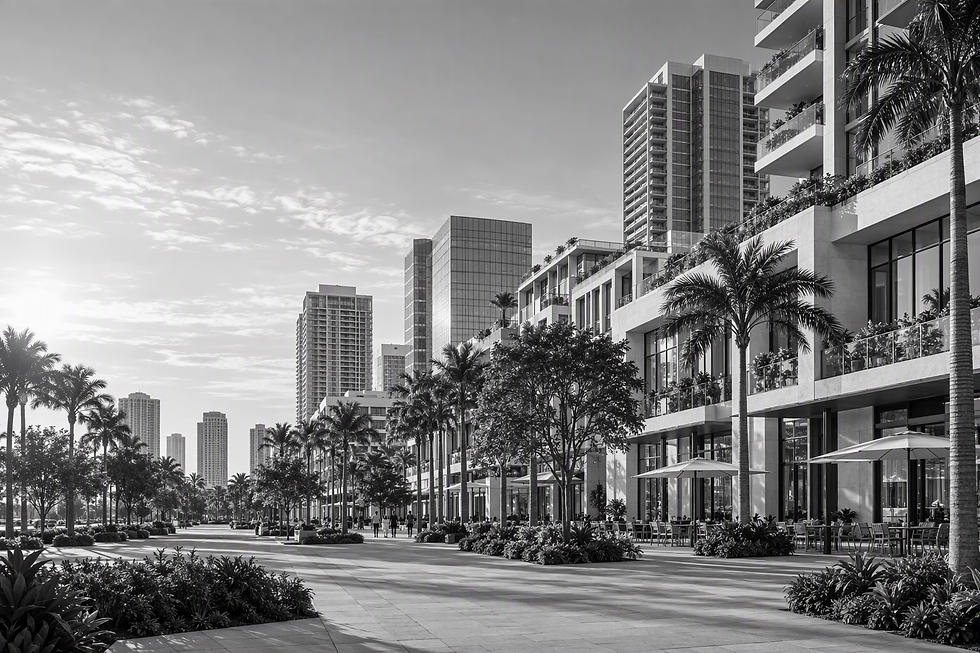
Mixed-use buildings combine two or more uses, most often ground-floor retail or office beneath residential or office floors. Each use produces its own income stream, with its own tenants, lease terms, and operating needs. The uses support one another: residents and office workers drive retail traffic, while street-level shops add residential appeal. Pricing depends on the strength of every component, how well they complement one another, and the zoning permitting the combination.
[06]
Healthcare Real Estate
Medical office buildings house physicians, specialists, and health systems delivering care outside inpatient settings. They range from on-campus buildings beside a hospital to off-campus facilities for ambulatory surgery, imaging, and specialty care. Specialized build-outs and established patient relationships make relocation costly, so tenants often renew. Pricing reflects tenant credit, health system affiliation, lease term, renewal history, and proximity to referral sources and patients.
Medical retail, or medtail, places healthcare services in retail settings, from shopping center storefronts to freestanding pad buildings. Common tenants include urgent care, dental, dialysis, physical therapy, and optometry practices. Patients value the visibility, parking, and convenience, while landlords gain occupants largely insulated from online competition. Many occupy space vacated by traditional retailers, often investing heavily in their own improvements. Its pricing turns on operator credit, lease term, build-out cost, co-tenancy, and trade area demographics.
[01]